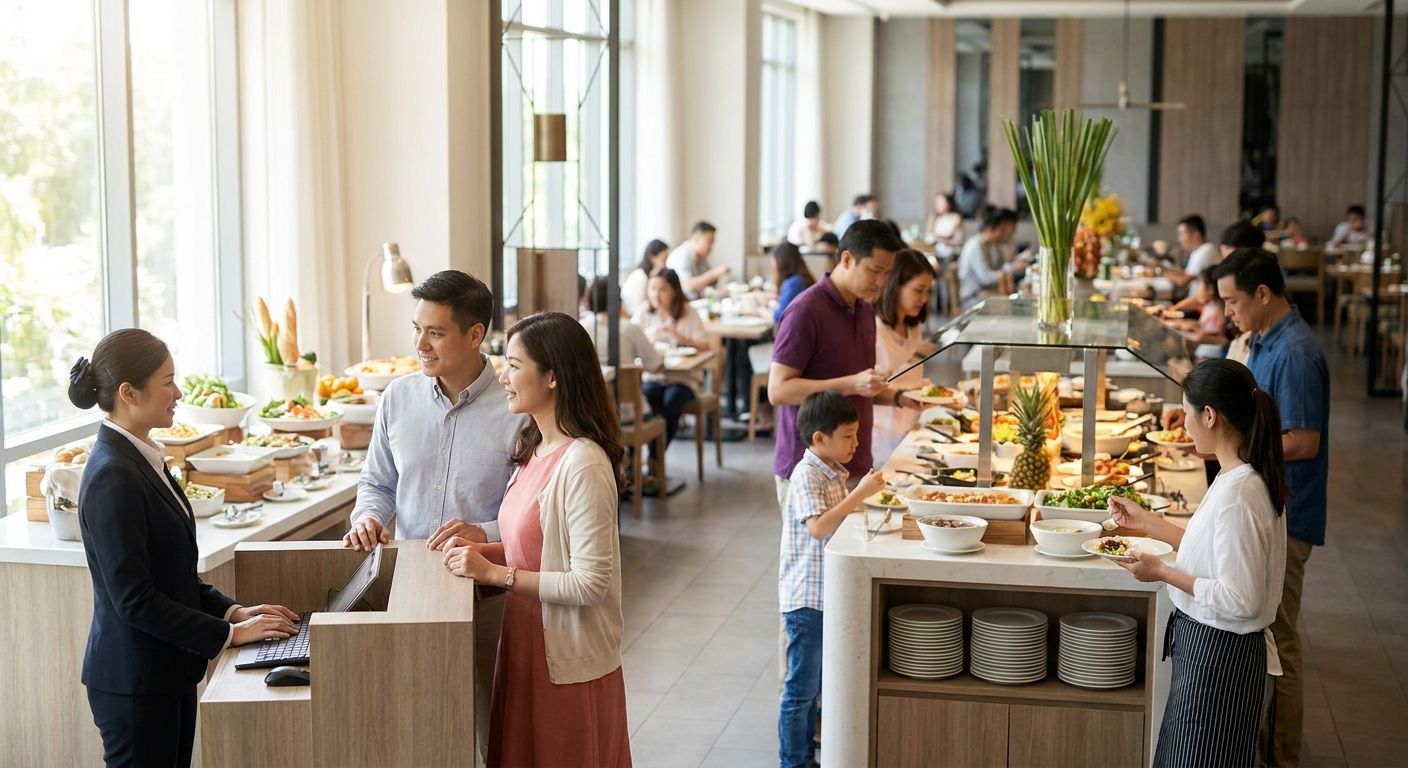
Buffet and cafeteria restaurants make money on the fourth plate, not the first click. New customer acquisition for buffet restaurants only works when it's priced on someone actually walking through the door during your dead hours, not on an impression nobody can trace back to a seat filled.
- Pay-per-verified-visit platforms like Eveoy tie cost to a real walk-in, not a click, and refund you if the shopper never shows.
- New customer acquisition for buffet restaurants fails when it's priced on clicks, because clicks don't fill off-peak seating.
- Google Business Profile optimization is free and compounds over 60-90 days, but it won't fix a Tuesday 2 PM lunch slump by itself.
- Direct mail and third-party delivery listings are the weakest 2026 picks for buffet dine-in traffic — skip both for steady acquisition.
- Eveoy charges $24.99 per verified visit with 10+ minutes on-site and photo or video proof, refunded automatically on a no-show.
Why this matters
A buffet or cafeteria doesn't break even on one plate. It breaks even on the second and third trip to the line, and it profits on the customer who comes back Thursday without being asked. That math makes cost-per-click advertising the wrong tool: a click tells you nothing about whether anyone sat down, ate, and decided to return.
Most restaurant marketing still gets sold on reach and impressions. Eveoy flips that: you pay $24.99 only when a verified shopper walks in, stays 10+ minutes, and submits photo or video proof. No visit, no charge — the fee refunds automatically.
“A click is a bet. A verified visit is a receipt.”
Who this is for
This is for the buffet or cafeteria owner running an all-you-can-eat concept, a Chinese or Indian buffet, a Golden Corral-style operation, or a cafeteria-style restaurant with a public dining room — anyone trying to fill 2 PM lunches and Tuesday nights, not just Friday dinner. If your kitchen has capacity sitting idle three or four hours a day, this guide is built around your problem specifically.
What to look for in new customer acquisition for buffet restaurants
Cost tied to a visit, not a click
A buffet's margin comes from volume through the door, so paying for traffic that never sits down is a straight loss. Any acquisition channel worth using in 2026 should charge you when a person shows up, not when an ad gets seen.
Off-peak scheduling control
Buffets bleed money on empty 2-4 PM windows and slow weeknights, and generic ads can't target a specific dead hour. You need a channel that lets you push traffic exactly when your dining room is thin, not just whenever the algorithm decides to spend your budget.
Proof you can actually show
A screenshot of ad impressions proves nothing to your landlord, your franchisor, or your own P&L. Photo and video proof of a real person eating in your dining room is the kind of evidence you can hand to an investor or post as user-generated content without editing.
Local radius, not national reach
Buffet customers drive 3-8 miles on average for an all-you-can-eat meal — nobody flies in for a steam tray. Acquisition that targets a metro area or a national audience wastes most of its spend on people who will never walk through your door.
Built-in no-show protection
Every acquisition channel has some rate of people who never convert. The difference is whether you eat that cost or get it back — a refund on a no-show visit is the difference between a marketing expense and a marketing bet.
Top picks for buffet and cafeteria customer acquisition
Pay-per-verified-visit platforms (Eveoy) — the safe pick. $24.99 per verified visit, 10+ minutes on-site, photo/video proof required, refunded automatically if the shopper doesn't show. This is the only model on this list where the cost basis is a confirmed walk-in rather than a hope. Buy for filling specific off-peak windows without paying for guesses.
Google Business Profile and local SEO — the compounding pick. Free to run, but it takes roughly 60-90 days before search-intent traffic ramps, and it depends on you actually collecting and responding to reviews. It's the tactic every buffet should have running in the background regardless of what else is funded. Buy as a permanent baseline, not a standalone plan.
Geo-targeted social ads — the volume play. Local Facebook and Instagram campaigns typically run $0.50-$2 per click in the restaurant category, and reach a lot of people fast within a set radius. The catch is there's still zero proof any of those clicks turned into a seated customer. Consider it for awareness around a launch, not as your only acquisition line.
Direct mail and coupon mailers — the legacy pick. Response rates on restaurant coupon mailers historically sit around 1-2%, and every redemption trains a customer to expect a discount rather than to value the buffet itself. It still moves foot traffic in some ZIP codes, particularly for a grand opening. Consider only around a launch event; Skip as ongoing spend.
Third-party delivery app listings — the wildcard. Delivery apps drive takeout orders, and a buffet's entire business model is the walk-in dining room, so this tactic pulls margin toward a channel that undercuts the format you're selling. Skip it for buffet dine-in acquisition specifically.
For a broader breakdown of what actually moves foot traffic before you commit budget, the foot traffic playbook covers the mechanics behind verified-visit acquisition in more depth.
Fill your off-peak hours
Pay $24.99 only when a verified shopper walks in and stays 10+ minutes.
What to avoid
- Impression-based ad packages sold as "brand awareness." A buffet doesn't need brand awareness, it needs seats filled at 2 PM on a Tuesday — impressions don't tell you if that happened.
- Influencer posts with no visit requirement. A follower seeing a photo of your buffet is not the same as a follower walking in and eating; without a verified-visit condition, you're paying for content, not customers.
- Discount-only coupon campaigns run indefinitely. A one-time launch coupon gets people through the door; running it every month for years trains your customer base to only show up when there's a deal, which erodes the per-plate margin a buffet depends on.
Verdict comparison
| Tactic | Cost basis | Off-peak control | Proof of visit | Verdict |
|---|---|---|---|---|
| Pay-per-verified-visit (Eveoy) | Per confirmed walk-in ($24.99) | High — target specific hours | Photo/video required | Buy |
| Google Business Profile / local SEO | Free (time cost) | Low — search-driven | None | Buy (baseline) |
| Geo-targeted social ads | Per click ($0.50-$2) | Medium | None | Consider |
| Direct mail / coupons | Per piece mailed | Low | None | Consider (launch only) |
| Third-party delivery listings | Per order/commission | None | None | Skip |
FAQ
What is the best new customer acquisition method for buffet restaurants in 2026?
Pay-per-verified-visit platforms are the strongest 2026 option for buffet restaurants because they charge only when a real person walks in and stays, not when an ad gets clicked. Eveoy charges $24.99 per verified visit with a 10+ minute dwell time and photo/video proof, refunded if the shopper never shows.
How much does customer acquisition cost for a buffet restaurant?
Costs range from free (Google Business Profile and local SEO) to $0.50-$2 per click on geo-targeted social ads, to $24.99 per confirmed walk-in on a pay-per-verified-visit platform. The verified-visit model costs more per unit but wastes nothing on people who never showed up.
Is Google Business Profile enough to fill off-peak buffet hours?
No. Google Business Profile builds search-intent traffic over roughly 60-90 days, but it doesn't let you target a specific dead hour like a Tuesday 2 PM lunch. Pair it with a channel that can push traffic into exact windows.
Do coupon mailers still work for buffet restaurants?
They generate a short bump around a grand opening, with historical response rates around 1-2% on restaurant mailers, but running them long-term trains customers to expect a discount instead of valuing the buffet. Use them for a launch, not as ongoing acquisition.
Should buffet restaurants list on third-party delivery apps?
Delivery apps drive takeout orders, which works against a buffet's dine-in business model and margin structure. Skip delivery listings if the goal is filling the dining room, not moving food out the door.
What counts as a verified visit for a buffet restaurant?
On Eveoy, a verified visit means a shopper stays 10+ minutes and submits photo or video proof they were actually in your restaurant. If the shopper doesn't show, the $24.99 fee is refunded automatically.
How do buffet restaurants get repeat customers, not just first visits?
The first verified visit is the acquisition cost; repeat visits happen when the food and value earn a second trip on the customer's own initiative. Pay-per-visit models only guarantee the first walk-in — what happens after that is on the buffet.
What's the difference between foot traffic marketing and click-based ads for restaurants?
Foot traffic marketing charges for a confirmed physical visit; click-based ads charge for someone tapping a link with no guarantee they ever showed up. For a buffet, only the visit pays the bills.
One last thing
The 10+ minute dwell requirement matters more for buffets than almost any other retail category — a customer who walks in, glances at the steam trays, and leaves in three minutes never actually ate, and never actually became a customer. Ten minutes is roughly the time it takes to load one plate and sit down, which is the real test of whether new customer acquisition for buffet restaurants worked at all.