Thrift and resale stores don't run paid search campaigns or influencer budgets — they run on shelf space, word of mouth, and whoever walks past the window that day. This guide breaks down how to increase foot traffic to a thrift store in 2026, step by step, with tactics built for stores that live and die by walk-ins.
- Rotate inventory weekly and promote a fixed 'new drop' day — freshness drives repeat visits more than any ad.
- Pay only for verified walk-ins with Eveoy at $24.99 per visit, refunded automatically if the shopper never shows.
- Google Business Profile updates and cross-promotions with nearby shops outperform social boosts for resale stores.
- Track weekly foot traffic against inventory turns and average dwell time, not follower counts.
Why this matters
Online resale platforms give shoppers infinite scroll and free shipping. A physical thrift store gives them one thing those platforms can't: the thrill of finding something in person, right now, in your aisle. If your foot traffic is flat in 2026, the fix isn't a bigger ad budget — it's making the in-store hunt worth the drive.
Most thrift and resale owners already know their regulars by name. The problem is new faces. Consignment and donation-based retail lives on volume: more people through the door means more sales, more donations, and more inventory turning before it becomes clutter. Every tactic below is aimed at getting first-time visitors in the door and giving them a reason to come back without you paying for another boosted post.
What you'll need
- A donation or consignment intake schedule you can commit to weekly
- A Google Business Profile that's claimed and updated (hours, photos, categories)
- A signage or window display budget, even a small one — $50 to $100 a month covers most stores
- A way to verify that marketing spend is turning into actual walk-ins, like Eveoy, which only charges when a real shopper spends 10+ minutes in your store and submits photo proof
- Staff time to run one weekly promotion and check in on local partnerships
- A simple tracking sheet: daily foot traffic, transactions, and where visitors say they heard about you
The steps
1. Set a baseline before you change anything
You can't measure an increase in foot traffic if you don't know your starting number. Count daily walk-ins for two full weeks in 2026 before launching any new tactic — use a door counter, a tally sheet at the register, or your POS system's customer count if it tracks that.
Most thrift stores underestimate their own traffic because they only count transactions, not browsers. A store with 40 daily transactions might actually see 90 people walk in. That gap between visitors and buyers is where your growth opportunity lives.
Common mistake: skipping the baseline and judging every tactic by "it felt busier." Feelings don't hold up when you're deciding what to keep funding next quarter.
2. Rotate your window display every single week
A static window is the fastest way to train your neighborhood to stop looking. Resale shoppers are hunting for the unexpected, so a window that changes weekly signals "there's something new in here right now."
Pick one anchor piece — a statement coat, a mid-century lamp, a stack of vinyl — and build the display around it. Change it on the same day each week (Friday afternoon works well before weekend browsing) so regulars start timing their visits around it.
Common mistake: rotating stock but leaving the window untouched for a month. The window is doing the advertising your ad budget isn't.
3. Announce a fixed "new drop" day
Thrift shoppers behave like sneaker resale shoppers when you give them a reason to: they show up on release day. Pick one day a week — Tuesday morning is common for donation-heavy stores — and put your best-condition, best-brand items out then, every time, without exception.
Post it everywhere: the door, the register, Instagram, your Google Business Profile updates. Consistency is the entire mechanic. A drop day that moves around defeats the purpose.
Common mistake: treating every day as a drop day. If nothing is special, nothing pulls people in on a schedule.
4. Turn showing up into something you can measure
Most thrift stores can't tell you which marketing dollar brought which shopper through the door. That's the gap Eveoy is built to close: you pay $24.99 only when a verified shopper actually walks in, stays 10+ minutes, and submits photo or video proof. If they don't show, the charge is refunded automatically.
Run it alongside your drop days and window rotations for a full month in 2026 and compare the verified visit count against your baseline foot traffic. That comparison tells you whether your in-store experience is actually converting new faces into buyers, not just whether people saw a post.
Common mistake: paying for reach that never sets foot in the store. A like isn't a customer; a verified visit is.
Pay only for verified walk-ins
$24.99 per verified visit, refunded automatically if the shopper doesn't show.
5. Run a donation-day incentive
Donation-based thrift stores have a built-in traffic lever most retail stores don't: the drop-off itself is a store visit. Offer a small discount or a raffle entry for anyone who donates a bag of items, redeemable the same day.
This does two things at once — it feeds your inventory pipeline and it puts a donor in front of your racks while they're already in the building. Track how many donors convert to buyers same-day; stores running this consistently see donors browsing more than they expected to.
Common mistake: accepting donations at the back door only. Route every donor through the sales floor.
6. Partner with two or three nearby businesses
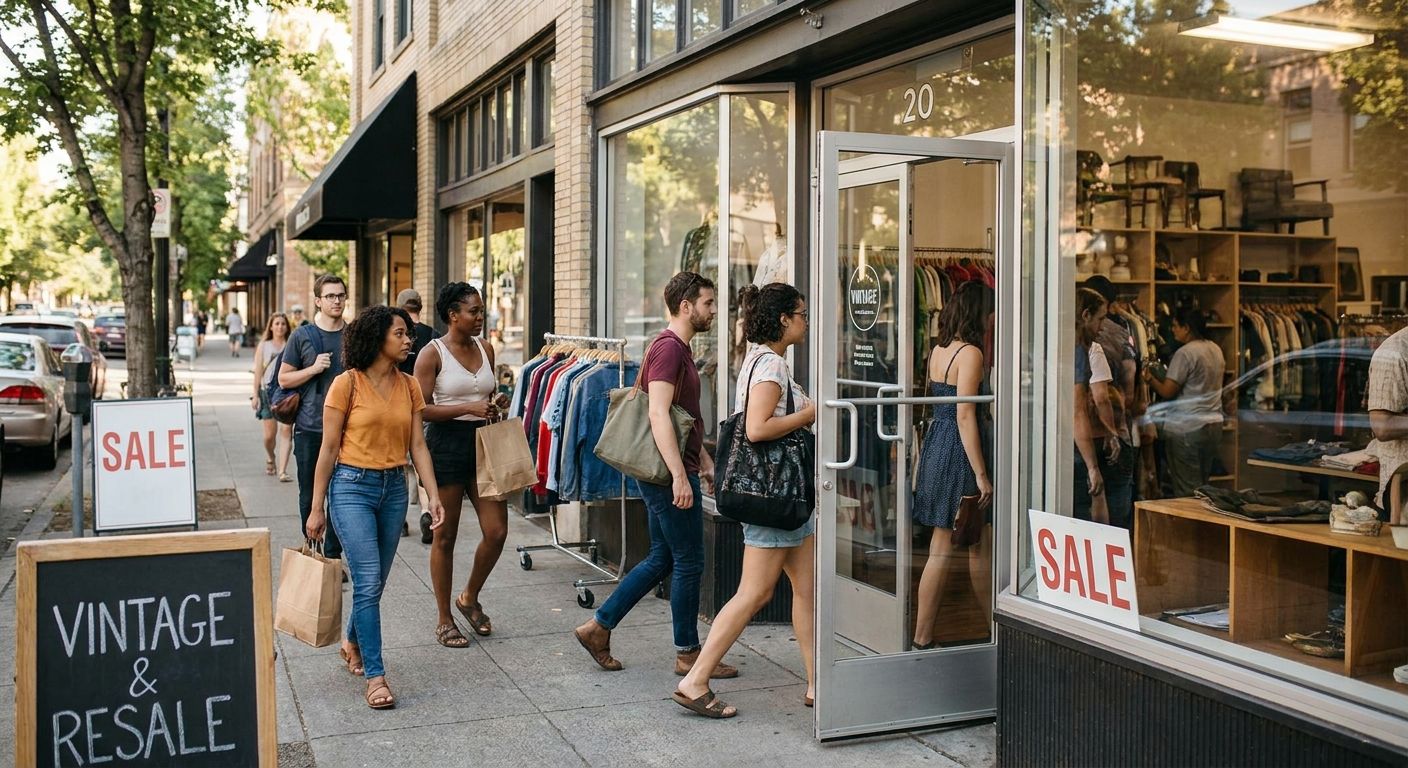
A "thrift crawl" with two or three other local shops — a coffee shop, a vintage record store, another resale spot — splits the marketing work and multiplies the foot traffic pool. Cross-promote a single Saturday, share a printed map or a shared Instagram story, and split the cost of flyers.
This works especially well in walkable downtown strips where shoppers are already moving between storefronts. You're not competing with these businesses for the same dollar; you're sharing a customer who wants an afternoon out.
Common mistake: partnering with a business that shares zero customer overlap. A thrift store and a nail salon on the same block usually pull different foot traffic patterns.
7. Fix your Google Business Profile before you spend on anything else
A thrift store with an unclaimed or outdated Google Business Profile is invisible to "thrift stores near me" searches — the single highest-intent search phrase in this category. Update hours, add fresh photos weekly, and respond to every review within 48 hours.
This step costs nothing and takes under an hour a week, but it's the step most owners skip because it feels like busywork instead of marketing. It's marketing.
Common mistake: letting reviews sit unanswered. A response — even a short one — signals an active, cared-for store to the next searcher.
8. Review the numbers weekly, not monthly
Check foot traffic, transactions, and average dwell time every week in 2026, not once a quarter. Weekly review lets you catch a dead Tuesday or a dying drop day before it costs you a full month of momentum.
Common mistake: waiting for a quarterly review to notice traffic has been sliding for six weeks straight.
Troubleshooting
- Traffic is up but sales aren't: you're pulling browsers, not buyers. Check pricing against nearby resale competitors and make sure your best items aren't buried in the back.
- Social buzz but no walk-ins: the post is working, the store isn't. Audit your Google Business Profile hours and address for errors — a wrong hour listing kills more visits than a bad photo.
- Weekday foot traffic is dead: move your donation-day incentive or drop day to a slow weekday instead of stacking everything on the weekend.
- Regulars aren't bringing friends: add a simple referral card at checkout — a small discount for the regular and the friend both.
- Verified visits aren't converting to sales: check dwell time patterns; 10+ minutes browsing with no purchase usually means pricing friction, not traffic friction.
Tools and resources
- Google Business Profile — free, and the single highest-leverage tool on this list
- A door counter or POS visitor count feature for your weekly baseline
- Eveoy for verified, pay-per-visit foot traffic you can measure against every other tactic
- A shared spreadsheet or notebook for weekly foot traffic, transactions, and dwell time
- Local Facebook community groups and neighborhood apps for donation-day and drop-day announcements
What to do next
Once your drop days, window rotations, and Google Business Profile are running, the next move is tightening the loop between marketing spend and actual walk-ins. A deeper breakdown of that process, built for retail stores generally rather than thrift specifically, is here: increase foot traffic to your retail store.
FAQ
What's the fastest way to increase foot traffic to a thrift store?
A fixed weekly 'new drop' day combined with a Google Business Profile update is the fastest low-cost move — most stores can launch both within a week in 2026. Verified pay-per-visit marketing adds measurable traffic on top once the basics are running.
How much does it cost to increase foot traffic with paid marketing?
With Eveoy, it costs $24.99 per verified visit, refunded automatically if the shopper doesn't walk in. There's no charge for reach, clicks, or impressions that never set foot in the store.
Is social media enough to drive walk-ins for a thrift store?
Social media builds awareness but rarely converts to walk-ins on its own for resale stores. Pairing posts with a Google Business Profile, a fixed drop day, and verified visit tracking closes the gap between attention and actual foot traffic.
How often should a thrift store rotate its window display?
Weekly, on a fixed day, is the standard that trains repeat shoppers to check back. A window left unchanged for a month signals to passersby that there's nothing new inside.
Does donation volume affect foot traffic?
Yes — every donor drop-off is a store visit, and donation-day incentives turn that visit into browsing time. Routing donors through the sales floor instead of a back door captures that traffic.
What foot traffic metrics should a thrift store track weekly?
Daily walk-in counts, transaction counts, and average dwell time are the three that matter most. Reviewing them weekly instead of monthly catches a slipping drop day before it costs a full month of momentum.
Can local business partnerships really increase thrift store traffic?
A shared promotion with two or three nearby, non-competing businesses splits marketing cost and pools two customer bases into one afternoon. It works best in walkable retail strips where shoppers already move between storefronts.
What's the biggest mistake thrift stores make with foot traffic marketing?
Paying for reach — likes, impressions, boosted posts — without any way to confirm it produced a walk-in. Verified visit tracking closes that gap by charging only when a shopper actually shows up.
One last thing
The stores that win at foot traffic in 2026 aren't the ones with the biggest ad spend — they're the ones that made showing up worth it and then proved it happened. A refund on a visit that never showed costs you nothing; a verified visit that walked in, browsed for 10 minutes, and left with something is the only kind of marketing math a thrift store actually needs.